01 Understand
Trace the water history
An old ceiling leak, a plumbing problem and recurring condensation can leave similar marks. Tell us what happened and what was repaired. A dry surface alone doesn’t tell us whether the material behind it is dry.
A stain on the wall only shows part of the problem. We look at the affected materials, how they got wet and what needs to happen before repairs can close the area back up.
Talk to GreenRoom Remediation about your home or building. If water is still coming in, call us for current availability.
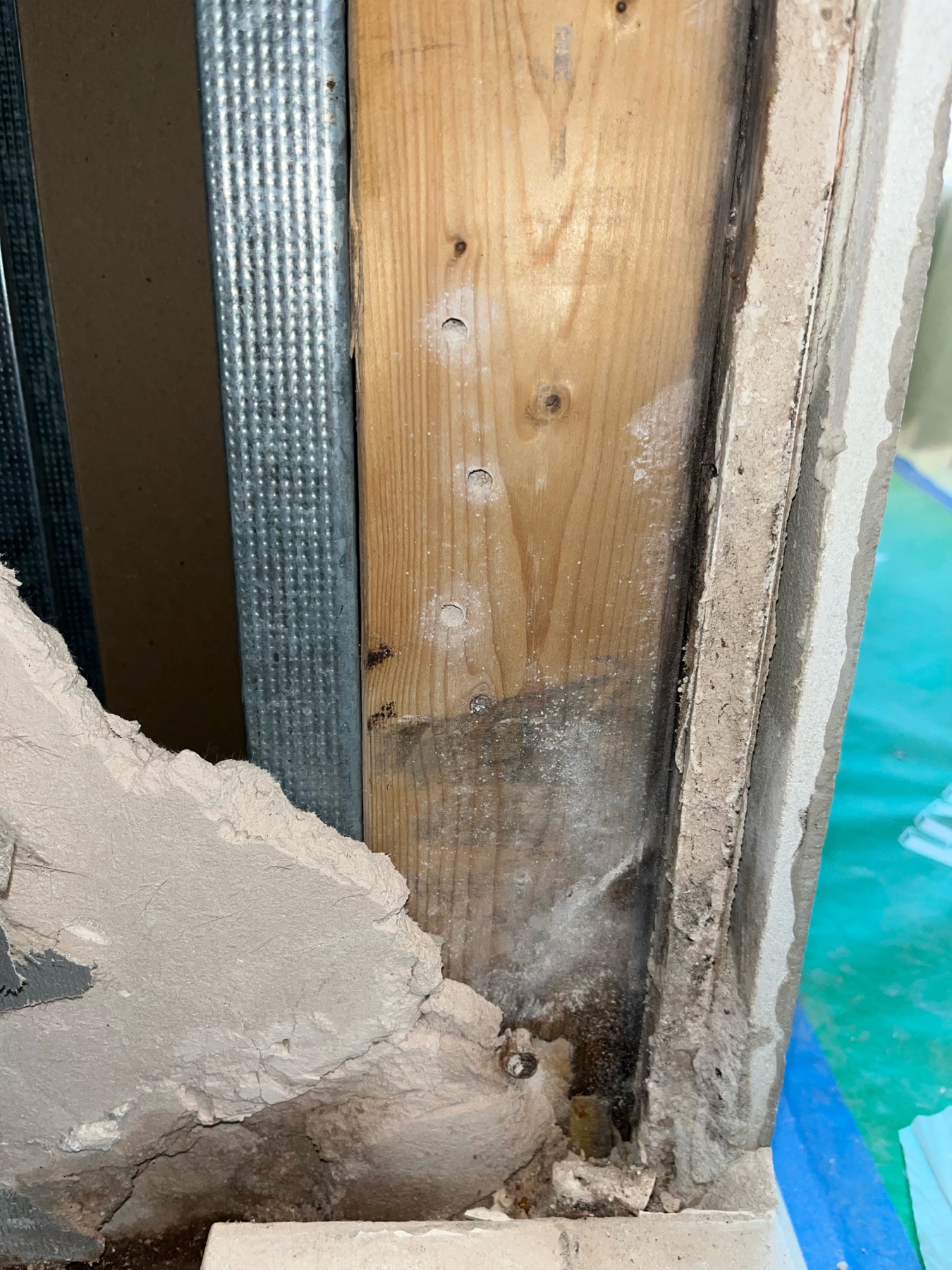
Wet drywall, wood framing and tile don’t all need the same treatment. The material, the extent of growth and the moisture source affect the scope. Where New York law requires an independent assessment, that plan guides the remediation.
An old ceiling leak, a plumbing problem and recurring condensation can leave similar marks. Tell us what happened and what was repaired. A dry surface alone doesn’t tell us whether the material behind it is dry.
The scope needs to account for occupied rooms, access and how debris will leave the building. Containment and dust control help keep removal work from spreading material into adjacent areas. The setup depends on the job and the required plan.
Some materials can be cleaned; others may need removal. We explain what falls within the remediation scope, what needs to dry and which moisture-source repairs may need a plumber or another trade before the area is rebuilt.
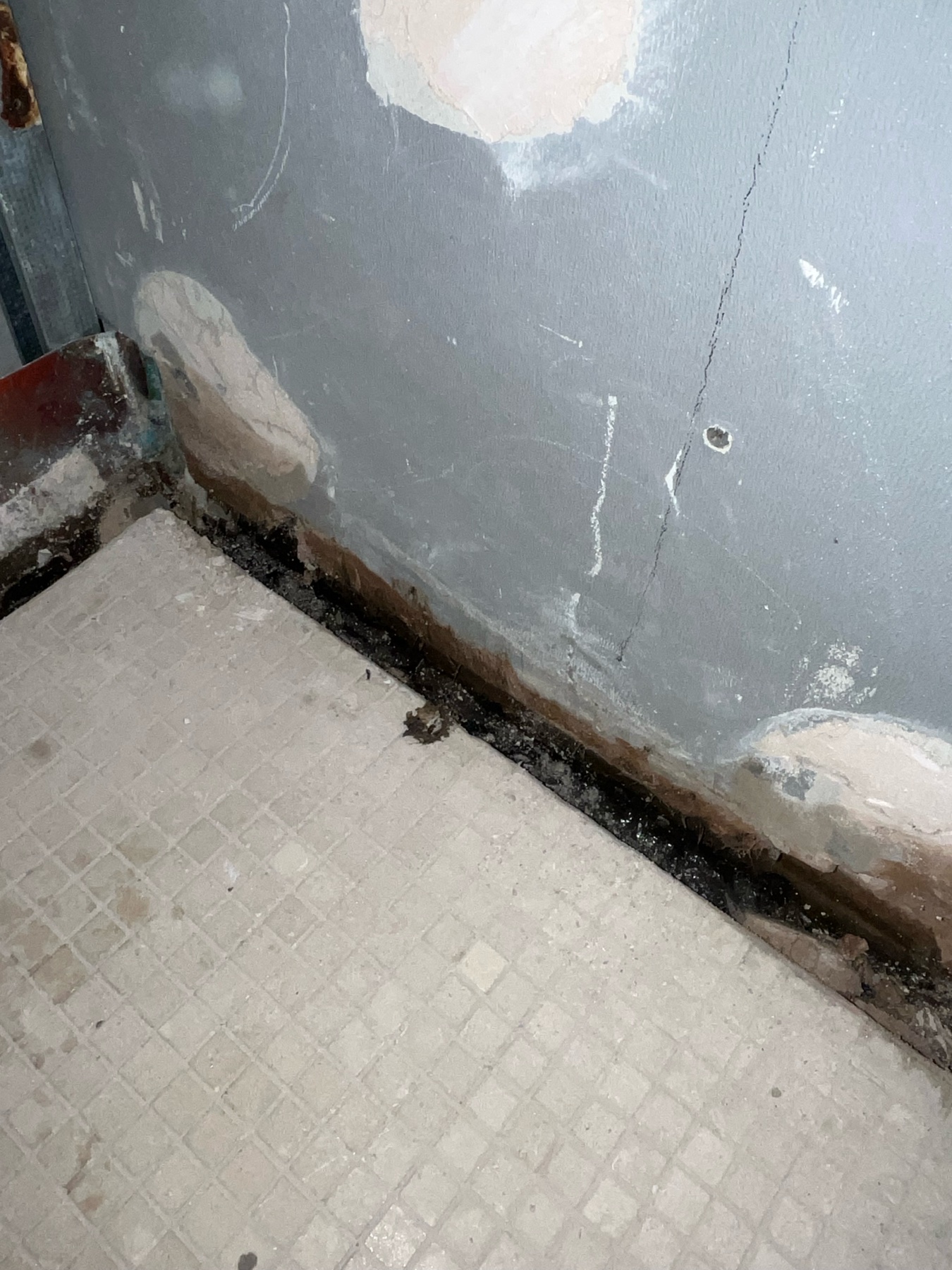
From our project photographs
The lower edge, the framing and the back of a wall finish can show different conditions. These photos show why the visible room surface is only one part of the inspection.
What can stay, what needs cleaning and what needs removal depends on the materials, moisture conditions and the required remediation plan.
Project photos show visible conditions only. They do not establish mold species, test results or a completed remediation outcome.
You can call without knowing the type of mold. Don’t open a wall or pull up flooring just to get a better photo. Tell us what you can see from a safe location.
The WeRemoveMold field guide
NYC rules, moisture problems and what a complete remediation project should include. Practical guides for owners, renters and building teams.
NYC buildings
Understand Local Law 55, covered-building requirements, independent contractors and the records to keep for a NYC mold project.
Read the guideMoisture & prevention
A practical sequence for leaks, drying records, hidden wet materials and deciding when a mold assessment is needed.
Read the guidePlanning the work
Compare scope instead of headline prices: affected materials, containment, building access, independent assessment, drying and reconstruction.
Read the guideNo. You can contact us about visible growth, water damage or a musty odor. Testing is not always necessary. A qualified independent assessor can determine what assessment or sampling is appropriate and prepare a remediation plan when required.
Cost depends on the affected area, materials, access, containment and the work required by the remediation plan. Send the details or an existing assessment to discuss a project-specific quote. Photos alone cannot establish a final scope or price.
No. A photo can show visible conditions and help us prepare for a conversation. It cannot reliably identify mold species, hidden growth or the full scope of a problem.
New York requires separation between assessment and remediation on the same project where the mold licensing law applies. GreenRoom does not present its own remediation work as independently assessed or cleared.
Yes. GreenRoom serves Brooklyn, Manhattan, Staten Island, Queens and the Bronx. Emergency service is available 24/7. Call for availability and a location-specific arrival estimate.
It means choosing methods for the material and conditions, preserving what can safely be kept and avoiding unnecessary treatment. Products still need to be used with the proper precautions. No product choice replaces correcting the moisture problem.
Learn more: EPA mold guidance · New York State mold program
Send the property location, affected rooms and any assessment you already have. We’ll discuss the scope with you.